
What Is a Concussion – and Why Is It Affecting the Way I Communicate?

You had a concussion. You feel mostly “okay” — but something is off. You’re losing your train of thought mid-sentence, blanking on words you know perfectly well, or struggling to keep up in conversations that never used to challenge you. Here’s what’s happening, and what you can do about it.
Medical Disclaimer: This article is for informational purposes only and is not a substitute for medical advice, diagnosis, or treatment. If you or a loved one is experiencing symptoms following a head injury, consult a qualified healthcare professional.
The Word “Mild” Can Be Misleading
Concussion is classified as a mild traumatic brain injury (mTBI) — but that label refers to injury severity on a clinical scale, not to how it affects your daily life. For many people, the impact is anything but mild. At least 3 million Americans sustain an mTBI each year, and roughly 1 in 5 experience symptoms that persist beyond the first month.
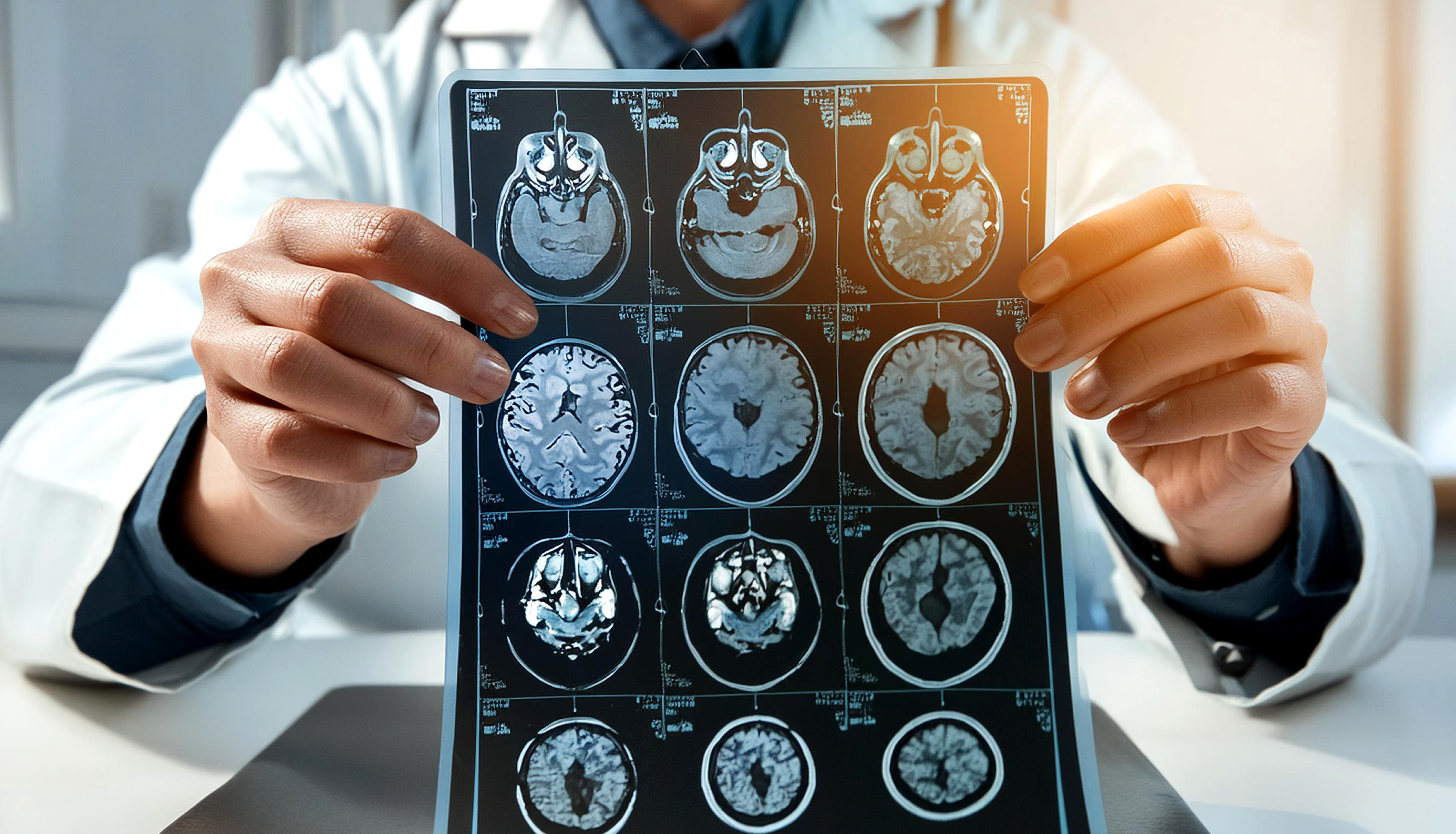
Unlike more serious brain injuries, a concussion typically doesn’t cause structural damage visible on a standard CT or MRI scan. Instead, the injury disrupts the brain at a cellular level: the rapid acceleration and deceleration forces of a head impact stretch and strain neural tissue, triggering a cascade of neurochemical changes that interfere with how brain cells communicate with each other. This is why someone can look completely fine on imaging — and still struggle to hold a conversation, remember a grocery list, or concentrate through a workday.
Some mTBI symptoms appear within hours of injury. Others emerge more gradually over days, as cognitive and environmental demands increase — like returning to work, school, or busy social settings. If your symptoms seemed to worsen after getting “back to normal,” this is a well-recognized pattern, not a sign that something went newly wrong.
What Symptoms Should I Expect?
Concussion symptoms are wide-ranging because the brain governs so many functions at once. Most people experience some combination of the following:
- Physical
- Headaches
- Dizziness or balance problems
- Sensitivity to light and noise
- Fatigue that feels disproportionate to effort
- Disturbed sleep
- Cognitive
- Slowed thinking or mental “fog”
- Difficulty concentrating
- Memory lapses
- Feeling overwhelmed by multi-step tasks
- Reduced mental stamina
- Emotional
- Irritability or low frustration tolerance
- Anxiety
- Low mood or depression
- Emotional reactions that feel out of proportion or difficult to regulate
- Communication
- Word-finding difficulties
- Losing track of conversations
- Trouble organizing thoughts verbally
- Difficulty following rapid or complex speech
- Changes in reading or writing ease
These symptoms often compound each other. Fatigue makes concentration harder. Poor concentration makes word-finding worse. Word-finding difficulties increase anxiety. Anxiety disrupts sleep. Understanding this interconnection matters — it’s why effective treatment addresses the whole picture, not just isolated symptoms.
Why Is Concussion Affecting the Way I Communicate?
This is one of the most common — and most underrecognized — effects of mTBI. Communication isn’t just a language skill; it depends heavily on attention, memory, processing speed, and other aspects of executive function. When those cognitive systems are disrupted, communication suffers even when there is nothing wrong with your underlying language ability.
Word-Finding and Verbal Expression
You know exactly what you want to say — but the word won’t come. This phenomenon, called anomia or word-retrieval difficulty, is extremely common after concussion. It can make speech feel effortful, halting, or frustrating. It may be most noticeable when you’re tired, stressed, or in a fast-paced conversation.
Following and Participating in Conversation
Slowed processing speed means that by the time you’ve fully understood what someone said, the conversation has moved on. Keeping up in group settings, on phone calls, or in noisy environments can feel disproportionately taxing. This isn’t a hearing problem or an intelligence problem — it’s a temporary change in how quickly the brain can decode and respond to incoming information.
Organizing Your Thoughts
Executive function difficulties — the brain’s higher-level planning and organizing abilities — can make it hard to structure ideas logically when speaking or writing. You may find yourself going off on tangents, losing the thread of what you were saying, or feeling like your thoughts are “scattered.”
Reading Social Cues
The social dimensions of social or pragmatic communication — reading between the lines, detecting tone or sarcasm, knowing when to speak and when to listen — require a significant amount of cognitive processing. Under conditions of fatigue or high cognitive demand, these pragmatic communication skills may falter even in people who never struggled with them before.
“I knew what I wanted to say. I just couldn’t get there.”
— A common description from people recovering from concussion
What Can Help: The Role of Speech-Language Pathology
Speech-language pathologists (SLPs) are specifically trained to assess and treat the cognitive-communication effects of brain injury — yet they remain underutilized in concussion care. If communication, memory, attention, or word-finding difficulties are interfering with your work, relationships, or daily life, an SLP evaluation is a valuable early step in recovery. Specialized SLPs are recognized as a key member of the interdisciplinary concussion care team, particularly for cognitive supports and functional rehabilitation.
Treatment is highly individualized, but common approaches include:
- Word retrieval strategies: Techniques like describing a word’s function or appearance, using synonyms, writing the first letter, or using gesture and drawing to “find” the word through a different route.
- Attention and memory strategies: Structured approaches for managing information more effectively — chunking, note-taking systems, verbal rehearsal, and environmental modifications.
- Processing speed support: Learning to request repetition without embarrassment, using context clues, and pacing conversations to reduce overwhelm.
- Communication confidence: Many people with mTBI begin avoiding demanding communication situations — meetings, phone calls, social events — which can lead to isolation. SLP treatment addresses both the skill deficits and the avoidance behaviors that can develop around them.
- Fatigue management: Understanding how cognitive load affects communication, and how to structure the day to protect mental energy for the things that matter most.
A note on gradual return to activity
Current evidence no longer supports prolonged complete rest after concussion. Advising patients to rest for more than 1–2 days has actually been associated with delayed return to work and school. A gradual, monitored return to cognitive and physical activity — increasing demands as symptoms allow — is now the standard of care. An SLP can help you apply this principle specifically to communication-intensive activities like work, school, and social life.
What Is the Outlook for Recovery?
For the majority of people, the prognosis after a concussion is genuinely positive. Most individuals see significant improvement within weeks to months. Symptoms that persist beyond this window are real and treatable — and continued improvement remains possible with appropriate, targeted intervention. Research suggests that roughly 10–25% of people experience post-concussion symptoms that persist over time, making early, comprehensive treatment especially important.
Recovery is rarely linear. Symptom fluctuations are normal and expected, particularly during periods of increased demand or stress. A difficult day does not mean you are going backwards — it reflects the nature of neurological healing, which unfolds over time and responds to the conditions placed on it.
The brain’s capacity for neuroplasticity — its ability to reorganize neural pathways, strengthen existing connections, and recruit alternative routes — underlies much of this recovery. With the right support, this capacity can be meaningfully harnessed.
Open Lines® Can Help
Our speech-language pathologists work closely with individuals recovering from concussion and mTBI to address cognitive-communication challenges — including word retrieval, attention, processing speed, memory, and the social demands of communication. Using evidence-based treatment, we help patients rebuild the skills and confidence to communicate effectively at work, at home, and in daily life.

At Open Lines, our team specializes in treating speech sound differences, delays, and disorders and we are deeply committed to applying…
This article provides general information and does not constitute medical advice. Always consult with healthcare professionals regarding specific…
Get in Touch With Open Lines®