Speech Therapy For Neurological Injury
REBUILD Your Life
Speech Therapy Services to Treat Stroke, Brain Injury, Parkinson’s Disease and Other Neurologically Based Communication Disorders
We know surviving and suffering from a neurological injury is devastating and can feel like it is the end, but we are here to help you turn that end into a new beginning so you can REBUILD your life!
Whether you are facing a progressive neurological disease, such as Parkinson’s, or you are recovering from a serious, life-debilitating event, such as a stroke, head or neck cancer, or brain injury, Open Lines®’ highly personalized approach is uniquely designed to help you meet your specific goals and provide you with customized, innovative solutions for recovery and improvement.
Customized Speech Therapy Services
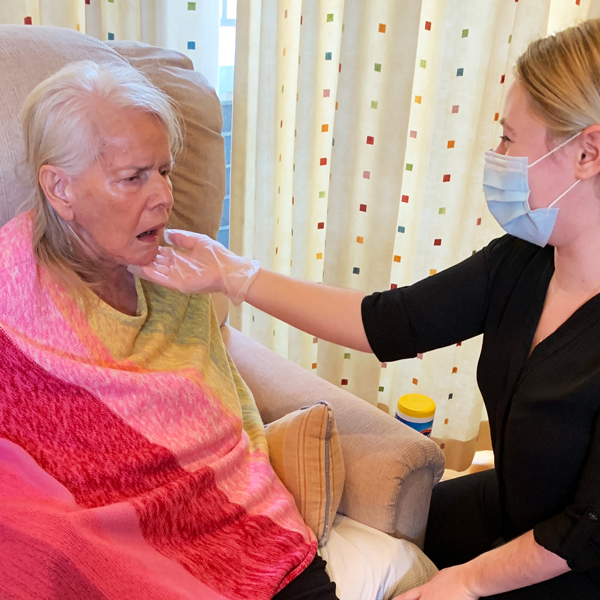
With intensive, evidence-based care and individualized precision, we help you rebuild your life after surviving devastating incapacities. Stroke can affect any or all of the following areas: speaking, understanding, reading, writing, remembering, organizing thoughts, reasoning, planning, problem-solving, making decisions, and most-importantly, participating fully and confidently in your life.
Our customized, intensive treatment plans help you regain your ability to live a meaningful life. Whether it is a few weeks, months, or years, our personalized team is at your service for as long as it takes you to learn to think and communicate with clarity and confidence again.
Seeking solutions beyond the standard treatments that are limited by insurance constraints and a lack of intensive treatment options, we answer questions other experts do not think to ask. Going beyond general routines and an insurance-focused practice, we take an active, investigative stance exploring alternative, creative solutions customized to your specific needs, situation, and goals. A caring, healing sensibility guided by research-based techniques motivates us — not insurance prerogatives.
We understand the difficulty of trying to regain functionality at a time when you are struggling both mentally, emotionally, and physically. However, successful treatment requires you to be willing and motivated to initiate, participate, and maintain compliance with our exercise recommendations — even through challenging periods — and our specialists are here to help you do this!
If you are overwhelmed by everything your doctors are telling you, it can feel like you are on an island without anyone to help, which only makes recovery more challenging. For that reason, we work closely with you throughout your journey, one-on-one, as little or as much as you would like, motivating you like a personal trainer, encouraging you to “show up” so you can achieve your goals.
The Open Lines® PRESENCE™ Approach
We believe treatment entails more than just cognitive-communication or physical therapies. Our uniquely trained therapists also understand and work with you on the mental and emotional aspects of managing communication difficulties associated with acquired or progressive neurological diseases.
All of our programs are provided by specialists who are trained in our PRESENCE™ Approach. The Open Lines® PRESENCE™ Approach is a proprietary, multifaceted technique that complements and supports the treatment exercise programs we provide. This approach guides you in a forward motion to help you participate more fully in your life in a way you would like. Fundamental to this approach is the integration of elements beyond the clinical environment, such as counseling and case management.
People who are affected by a progressive neurological disease, such as Parkinson’s disease, Alzheimer’s disease, dementia, ALS, primary progressive aphasia, need to be especially aware of how their emotional state may affect their speech and language.

The Open Lines® Difference
Unlike many small practices, we are not individual practitioners. We are an integrated team of masters and doctorate-level expert clinicians working together to provide excellent services for everyone. We can also extend beyond our team to enhance or optimize your results by opening the lines of communication to collaborate with anyone on your team.
Nationally certified in New York, New Jersey, California, and Florida, our team consists of professional researchers and writers for prestigious journals, trusted academicians, reputable lecturers, and certified clinical experts who practice in and continue to collaborate with New York’s top academic medical centers and private schools. Our clinical specialists are up on the latest research advancements but are not limited by areas that do not yet have the clinical evidence to support what needs to be done – we integrate and innovate solutions to ensure our clients meet their goals. As leaders in the field, we are proud and honored to be frequently consulted by medical doctors, health professionals, and speech-language pathologists from around the world about their most difficult cases.
We also understand privacy is a serious matter. Whatever the circumstance, we work closely with individuals and families to ensure excellent communication among immediate and extended care team members. We only share authorized information with consent. If you like, we work collaboratively with everyone on your personal team — from medical doctors to family members — to thoroughly understand your unique situation in its true context. This enables us to create highly targeted care plans that accelerate moving you to the next level. Facilitating open communication with your team also helps ensure optimal, consistent care.
Viewing all our clients as VIPs, we uniquely deliver personalized, high-end, “white glove” service. Based on your assessment, we will build a customized program based on one or more of our targeted programs.
Thinking, Speaking & Swallowing Services
If you are facing a progressive neurological disease, such as Parkinson’s disease, or are recovering from a serious, life-debilitating event, such as a stroke, head or neck cancer, or brain injury, we understand the changes and challenges you are confronting may feel unsurmountable.
We are here to help guide you toward a new beginning that will empower you to fully participate in life events and REBUILD your life! Read on to learn more about how different types of neurological disorders affect cognition, speech, voice, language, communication, and swallowing.

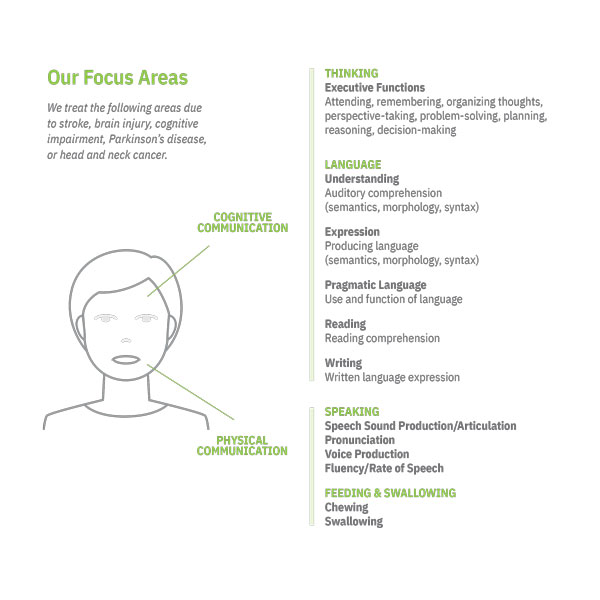
Our Focus Areas
We treat the following areas due to stroke, brain injury, cognitive impairment, Parkinson’s disease, or head and neck cancer.
If you are recovering from a stroke or brain injury or are living with a neurodegenerative disease, you may have trouble speaking clearly and fluently. It may be challenging to clearly articulate your words, control your voice, or project your voice to be loud enough to be easily understood by others. You may notice it is challenging to hold on to information and process what people are saying. You may find it difficult to find the exact word you want to say, and this may lead you to lose your train of thought, making it difficult to fully express your ideas.
Difficulty concentrating compounded with other language difficulties may also impact the ease with which you understand what you read and how you organize and express your thoughts in writing. Physical changes associated with neurological problems can also make it challenging to chew foods with different textures and consistencies or swallow with ease and comfort.
Cognitive Communication Program
Following Stroke, Traumatic Brain Injury, or Surgery
Cognition refers in part to the ability to pay attention and sustain attention, recall, process, use, and organize information, plan, problem-solve, make decisions, reason, interpret visual information, develop insight, and self-regulate. Cognition interacts with language to help a person communicate with others. Neurological injury can affect any or all of these skill sets, resulting in cognitive-communication disorder or aphasia.
Aphasia is a language impairment due to a neurological injury, such as stroke, disease, or traumatic brain injury. Aphasia can affect understanding, speaking, reading, writing, calculating, and overall function at work and in life.
Research has shown intensive exercise following an acquired cognitive-communication disorder or aphasia up to five days/week with a specialist can accelerate one’s ability to recover and return to fully living life with success, ease, and confidence. Within this program, a specialist guides participants through a series of exercises to help one more easily communicate in everyday activities. It is never too late! Even those who survived injury long ago can benefit, and our online, in-home and in-office intensive programs can help. Participate in an intensive program and stay the course to return to living life!
A traumatic brain event can disrupt any of these skills. The event may be acquired, such as a stroke, brain injury, brain tumor, or surgery and radiation due to head/neck cancer. However, a progressive neurodegenerative disease, such as Parkinson’s, Amyotrophic Lateral Sclerosis, Alzheimer’s disease, dementia, primary progressive aphasia, progressive supranuclear palsy may also have a negative impact on any or all of these skills over time.
Importantly, anxiety and emotional stress can also have a negative effect on an individual’s ability to listen, attend, understand, process, and interpret spoken language. These emotional states can also impact a person’s ability to hold on to a train of thought, speak in an organized and cohesive manner, read, write, and take part in meaningful conversational interactions.

Voice and Speech
Parkinson’s Disease and Atypical Parkinsonisms (Progressive)
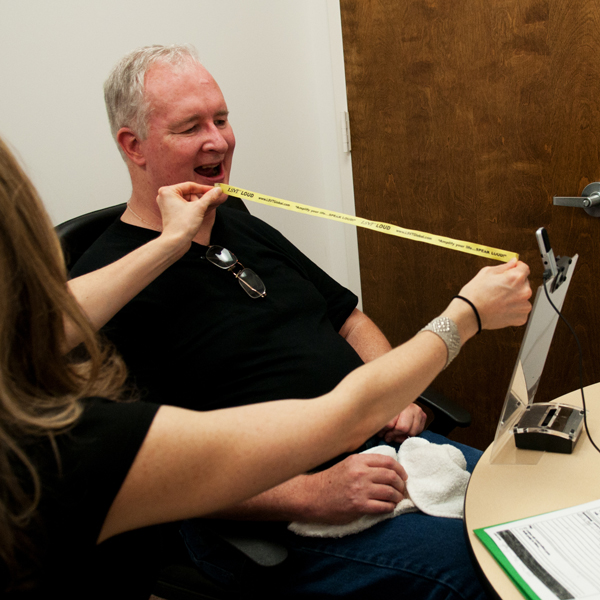
Stress or a change in mental or emotional state can impact thought organization, delay word retrieval, and disrupt our ability to sustain attention. This can look like difficulty finding specific vocabulary in a timely manner and can include difficulty planning and organizing ideas to be verbally expressed in a cohesive and coherent manner.
Often, the stress and discomfort of these kinds of experiences can stimulate the sympathetic nervous system (responsible for fight or flight,) causing a host of physical concomitants when speaking. An increase in stress or anxiety or a change in the emotional state also creates or emphasizes physical characteristics that interrupt speech and voice because of its direct structural and functional connections to parts of your brain that manage fear and flight/fight/freeze responses to stressful stimuli (Galgano, et al., 2019.)
These include, but are not limited to difficulty regulating and controlling the breath(i.e., running out of air) to experiences of stuttering, tightness, tension, and/or soreness in the throat or abdomen, and rough or strained vocal quality when talking.
Once these physiological responses set in, they frequently heighten your sensation of stress and frustration, further decreasing your capacity to efficiently access your executive functioning and language skills to communicate confidently and effectively. It can feel like you are trapped in a vicious cycle when this occurs.
While these symptoms can affect everyone, they are particularly applicable to individuals living with acquired or progressive neurological diseases, such as Parkinson’s disease, Alzheimer’s disease, dementia, ALS, primary progressive aphasia, and those recovering from strokes and brain injuries who are experiencing neurological changes which affect various aspects of communication.

Aphasia
Aphasia is an acquired language disorder, which can impact an individual’s ability to speak, understand language, read, and/or write. Aphasia is usually caused by a stroke in the left hemisphere of the brain, though it may be caused by other forms of brain trauma, such as a brain injury or tumor. People with aphasia may experience one or many of the described symptoms to varying degrees.
Dysarthria
Dysarthria refers to a group of speech sound disorders caused by changes in the neuromuscular control and coordination of the organs required for speaking. When someone has dysarthria, their muscles have difficulty moving with the necessary speed, strength, range of motion, timing, and accuracy required for crisp, clear speech. Dysarthria can impact breathing, voicing, articulation, prosody, and resonance. As a result, speech may sound slurred, robotic or choppy, too fast, or too slow. Voice may also sound monotone, monoloud, nasal, hoarse, strained, or breathy.
Apraxia
Apraxia refers to a type of speech sound disorder caused when the brain has difficulty sending neural commands to the muscles to plan and sequence the movements necessary for speech. Unlike dysarthria, speech musculature is normal and does not reflect weakness or incoordination. When someone has apraxia, the speech structures have difficulty performing volitional or intended movements because of the brain’s difficulty with commanding the speech muscles to sequence and perform movements in the correct order. This leads to groping to find articulatory postures and results in inaccurate and inconsistent production of speech sounds and words.
Voice Disorder
A voice disorder, or dysphonia, refers to any symptoms that negatively impact a person’s voice. Symptoms may include difficulty varying pitch to express emotion, or experiencing pain, discomfort, or fatigue when speaking. People with dysphonia may also have difficulty speaking loudly enough to be heard. They may exhibit a hoarse, breathy, or strained vocal quality. These symptoms are often the result of hyperfunction, poor vocal hygiene, or weakness or incoordination of the subsystems involved in voice production. Voice difficulties are may also manifest due to an underlying neurological disorder and may be exacerbated by an increase in anxiety or heightened emotion.
Dysphagia
Dysphagia refers to difficulty chewing and swallowing solids and liquids safely, comfortably, and efficiently. These difficulties can be the result of neurological changes which affect the muscles of swallowing, including the mouth, throat (larynx and pharynx), and esophagus. They can also arise when the anatomy and/or physiology of these muscles have been altered following surgical procedures, radiation therapy, tumor, or injury.
Frequently Asked Questions
Rebuild Your Life Through Speech Therapy Today
It is never too late! Even those who survived stroke long ago can benefit, and our online, in-home, and in-office intensive programs can help. Participate in an intensive program and return to living life!
Contact Open Lines today by phone at 212-430-6800, by email at [email protected], or through our contact form. If you are ready to take the next steps in treating your communication difficulties, request an appointment to discuss your goals and review our service options.