Speech Language Pathologist Staff Spotlight: Grace Ji Yan Tsang
At Open Lines®, our licensed speech language pathologists help children and adults rebuild their lives, improve their communication, and enhance their delivery. As a way…
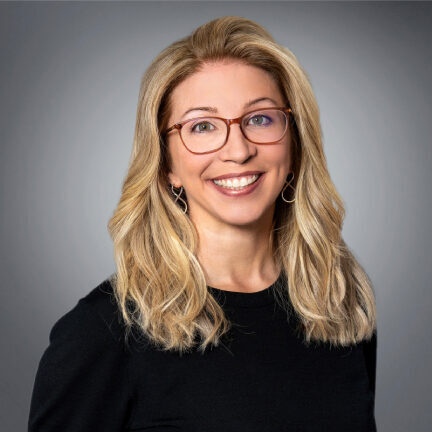
Founder, CEO, Speech-Language Pathologist
Dr. Jessica Galgano is a speech-language pathologist and the Founder and CEO of Open Lines Speech and Communication. Her personal experience growing up with a parent who suffered a combat-wounded Traumatic Brain Injury (TBI) while serving in Vietnam drove her to master the art and science of neurological rehabilitation. She founded her visionary clinic, Open Lines Speech and Communication, on the principle that it is never too late to improve one’s voice, speech, or cognitive-communication abilities.
The highest standards of academic and clinical practice are reflected in Dr. Galgano’s professional experience. She received her doctoral degree in Biobehavioral Sciences from Columbia University, where she conducted research on the neural underpinnings of voice using brain imaging modalities. Dr. Galgano is an LSVT LOUD® clinical expert and faculty instructor with LSVT Global, Inc., for whom she regularly teaches and lectures about evidence-based intensive therapy programs for people with neurologically based voice and communication disorders at major medical institutions in the US and worldwide. She is one of six LSVT LOUD® faculty instructors and clinical experts in the world.
Dr. Galgano is proud to be an Executive Board Member of the Academy of Neurologic Communication Disorders and Sciences (ANCDS), an association that supports practitioners who serve individuals with neurologic communication disorders by providing education, training, and certification opportunities to promote high-quality professional service. She has held research scientist positions at NYU Langone School of Medicine and Memorial Sloan Kettering Cancer Center and currently holds a faculty instructor position at NYU Grossman School of Medicine. She has been an adjunct professor with NYU, Columbia University, Teachers College, and San Francisco State University where she taught graduate coursework in the areas of voice disorders and neurogenic communication disorders that result from acquired (e.g., stroke) and progressive neurological disease (e.g., Parkinson’s disease, cognitive changes).
Further, close relationships with the Bank Street School for Children, The Spence School, and Corlears School for over a decade have also supported Dr. Galgano’s numerous years of clinical experience as a pediatric speech-language pathologist. In addition to clinical work, she has examined the effectiveness of intensive voice treatment in children with neurogenic speech disorders secondary to Cerebral Palsy and in children with Autism.
Dr. Galgano’s clinical expertise and research interests include examining and treating the clinical effectiveness of techniques and treatments available for professional voice users and performers, such as those used by the LaMaMa theater group based in NYC. She also specializes in the treatment of neurogenic respiratory-voice, speech and language disorders resulting from stroke (i.e., aphasia, apraxia of speech, dysarthria) and progressive neurological disease (e.g., Parkinson disease, PSP.)
One of Dr. Galgano’s main findings during her time as a researcher relates to the role of emotional pathways in the brain during the production of voice and speech. Before she researched the impact of stress and emotional influences on voice, Dr. Galgano studied the nerve potentials which occur to initiate it. This is of particular importance for patients suffering from Parkinson’s disease, where initiation of a movement or action is acutely impaired. Her work identified a novel method to analyze these potentials using high density electroencephalography which overcame shortcomings associated with earlier methods.

At Open Lines®, our licensed speech language pathologists help children and adults rebuild their lives, improve their communication, and enhance their delivery. As a way…

Filler words, such as “um,” “ah,” and “you know” are sometimes called crutch words, since people tend to lean on them to fill a pause…

Nobody is immune to a brain injury. Unfortunately, anomalous and unanticipated accidents can happen to anyone, anywhere. A traumatic brain injury (TBI) can arise as…

To the average person without much knowledge about communication disorders, speech therapy can be a relative unknown – that is, until you or a loved…

Speech-language pathologists (SLP) play an integral role in helping children and adults rebuild their lives, improve their communication, and enhance their delivery. Whether it is…

As children develop and age, they experience many changes in their ability to produce sounds and words. Whether making cooing sounds around 3 months of…

As we read, our brain rapidly translates letters to their corresponding sound. We quickly apply learned rules about alphabetic principles that enable us to swiftly…

Many of us take for granted how deeply we rely on our voice to convey our personality and our true sense of self. Through our…

Enjoying a favorite food or sharing a meal with loved ones is one of life’s great pleasures. While eating and swallowing is a daily routine…

Essential tremor (ET) is a neurological condition affecting more than 10 million Americans. It ranks as the most common tremor condition. This blog will…

Down syndrome, one of the more common birth defects affecting one in 700 babies born in the United States, is a lifelong condition that, depending…

Stuttering refers to an interruption in the flow and ease of speech. Examples include sound, syllable, or word repetitions, hesitations, prolongation of sounds, or a…